
Rollstock Packaging Machine Maintenance FAQ
Rollstock packaging machine maintenance is essential for reducing downtime, improving seal integrity, preventing film-tracking issues, and keeping horizontal form-fill-seal equipment running reliably. This FAQ explains the most common maintenance checks for film transport, forming, sealing, cutting, trim removal, sanitation, and spare parts planning.
Hover over a yellow numbered callout to preview related parts. Click or tap a callout to pin the selection so you can scroll through and follow the links below.
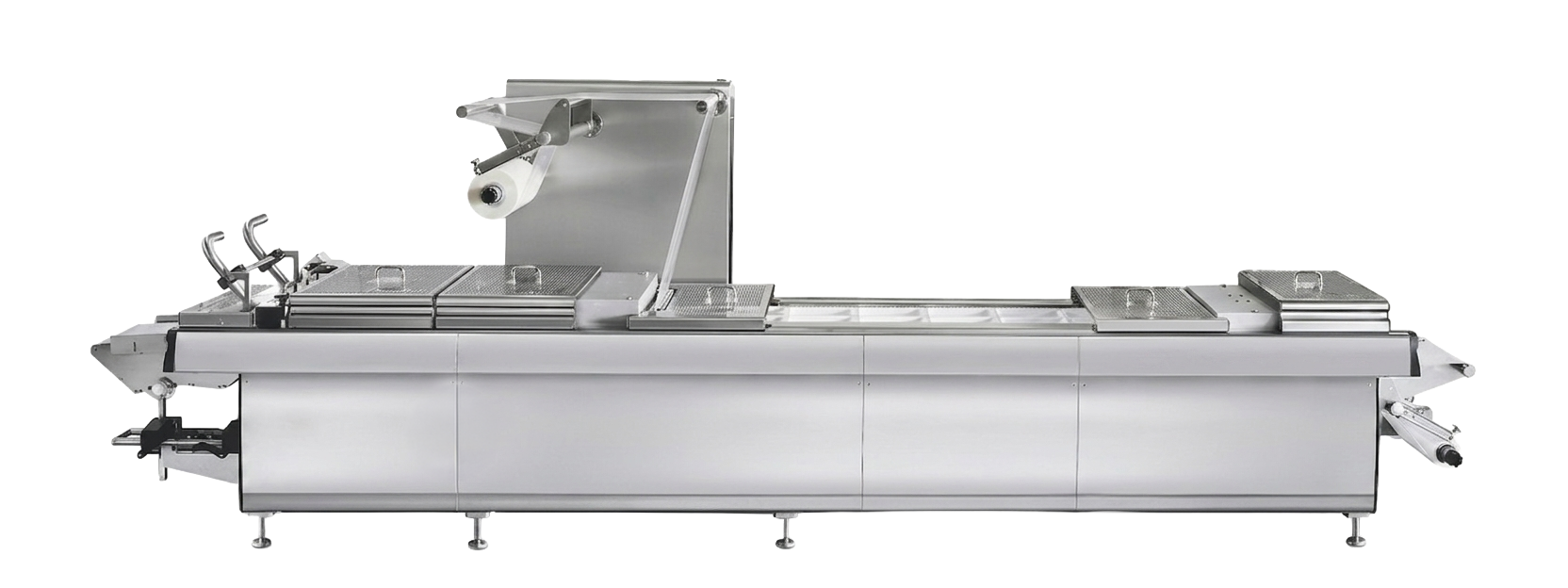
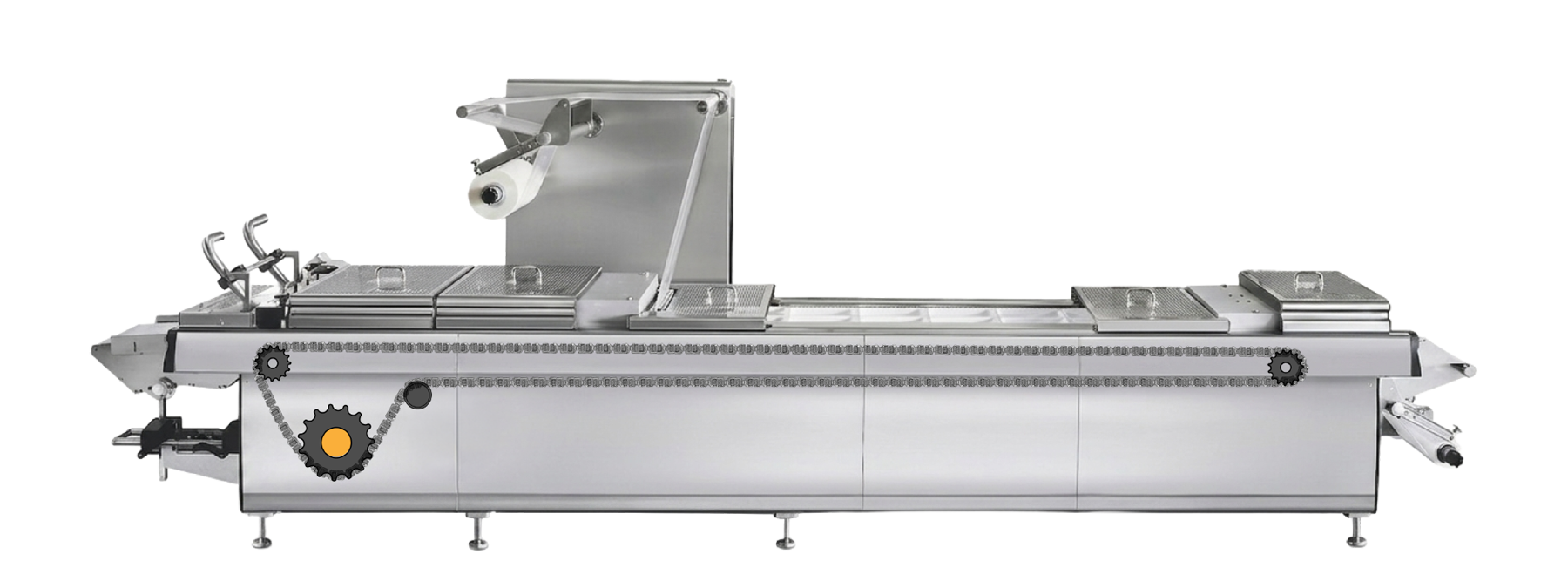
Because rollstock machines operate as a connected system, a small issue in one area can quickly affect package quality somewhere else. Film tracking problems can lead to poor forming or crooked cuts. Worn sealing gaskets can cause weak seals or channel leaks. Poor trim removal can create jams at discharge. Use the sections below to quickly find the machine area or maintenance topic most relevant to the issue you are trying to prevent or troubleshoot.
In This Guide
Quick Maintenance Reference
| Machine Area | What to Check First | Why It Matters |
|---|---|---|
| Film transport | Threading, tension, grippers, web tracking | Prevents wrinkles, skew, and registration drift |
| Forming | Heat, vacuum, blocked ports, pocket shape | Prevents poor forming and product fit issues |
| Sealing | Seal flange, gasket, seal plate, temperature | Protects package integrity |
| Cutting | Blade sharpness, alignment, anvils | Prevents ragged edges and connected packs |
| Trim removal | Suction, winder tension, trim path | Reduces jams and cleanup stops |
Daily Rollstock Machine Maintenance
Daily maintenance helps keep a rollstock machine running the same way from shift to shift. The goal is simple: catch small problems before they turn into bad seals, poor forming, film tracking issues, trim jams, or unexpected downtime.
Pre-Shift Safety and Setup Check
Before threading film or staging product, check these areas:
- Air Pressure (Pneumatic): Confirm the main air pressure is in the normal operating range. Listen for air leaks or hissing. Low or unstable air pressure can cause slow tool movement or incomplete tool closure.
- Film transport chains: Check that the film will enter the grippers evenly on both sides. Listen for chain chatter, rough movement, or unusual noise during indexing. Inspect the film transport chains at the infeed. Confirm the film edges will enter the grippers evenly on both sides. Listen for “chain chatter” or abnormal mechanical noise, which indicates uneven wear or improper tension.
- Sensors: Wipe sensor lenses with a clean, dry, non-abrasive cloth. Moisture, film dust, or product residue can cause missed readings or false alarms.
Do not move into full production until the machine is clean, assembled correctly, and the first acceptable packages prove the setup is stable.
High-Wear Parts to Check Every Shift
The following parts have a direct impact on package quality and machine uptime.
- Film Transport Grippers
- Check for broken springs, missing jaws, contaminated clips, or uneven gripping. If the film slips during indexing, narrows, wrinkles, or tracks unevenly, the grippers may not be holding the film correctly.
- If the film is slipping, tracking unevenly, or showing signs of gripper wear, Inter-Tech can help with replacement Regina gripper chain and master links.
- Sealing Gaskets: Inspect sealing gaskets for cuts, hard spots, flattening, or permanent compression. A worn gasket may cause weak seals, channel leaks, or repeat defects in the same lane.
- If seal problems continue after the machine reaches temperature, check the gasket, seal plate, and seal area before increasing heat settings.
- Threshold: If you observe lane-specific channel leaks or weak seals that persist even after the heater reaches its temperature setpoint, the gasket is failing.
- For custom-molded gaskets or lane-specific leaks: Inter-Tech Customer Molded Silicone Sealing Gaskets.
- Vacuum Ports: Inspect the forming die and sealing tool vacuum ports for blockages from film dust or product juices.
- Warning Sign: Blocked ports result in shallow pockets or poor corner definition.
- Cutting Blades (Cross-cut & Rotary): Check for film dust buildup or ragged edges on finished packages.
- Threshold: If packages remain connected after the cut (incomplete separation), the blade pressure is too low, or the knife is dull.
- For ragged cuts or incomplete separation: Replacement Blades and Knife Assemblies.
- Replacement cutting components
Production Checks During Startup
Before increasing speed, confirm these items are stable:
- Heat zones: Wait until all forming and sealing heat zones reach their operating temperature.
- SAFETY WARNING: Avoid increasing temperature settings to compensate for weak seals; check for seal area contamination first.
- Vacuum level: Watch for poor evacuation, ballooning, or inconsistent package shape. For persistent vacuum failure or complex mechanical timing issues – Call 800-722-7761 and discuss Emergency Field Services.
- Film tracking: Make sure the film is feeding evenly through the machine.
- Cut quality: Confirm finished packages separate cleanly.
- Seal quality: Inspect the first acceptable packages before running at full speed.
- Drive & Motor Performance: Watch the main drive for vibration. “Chain chatter” during high-speed indexing is an early warning sign of sprocket tooth wear or drive motor issues.
Standard Maintenance Rule: If the same defect appears in the same pocket, lane, or corner every cycle, stop and inspect the local tooling area. Repeat defects usually point to a specific part of the machine rather than a general setting problem.
Daily Rollstock Machine Startup Checks
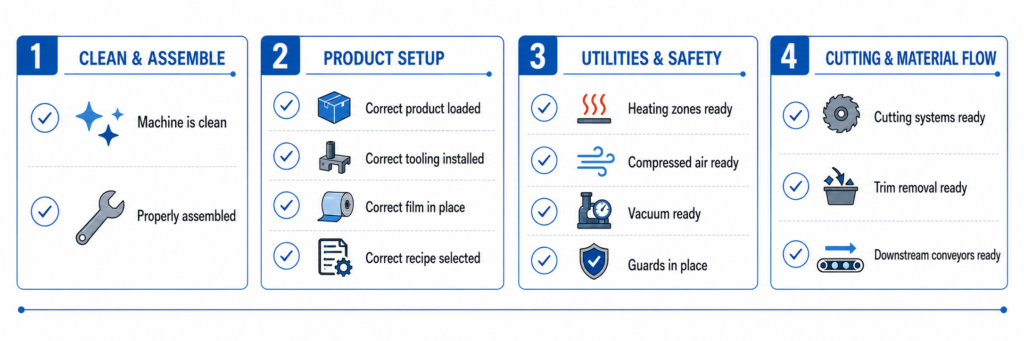
Before startup, make sure the machine is clean, assembled correctly, and set up for the correct product, tooling, film, and recipe. Do not start full production until the machine is stable and the first finished packages have been checked.
What should an operator check before starting a rollstock packaging machine?
Before threading film or loading product, check the main machine areas:
- Top and bottom film: Confirm the correct rolls are installed.
- Film threading: Make sure the film is threaded in the correct direction and tracking evenly.
- Heat zones: Make sure forming and sealing temperatures are at the correct operating range.
- Air and vacuum: Check for normal pressure and vacuum readings.
- Forming and sealing surfaces: Make sure these areas are clean and free of product, moisture, or film scrap.
- Cutting and trim removal: Check that blades, trim paths, and scrap areas are clear.
- Guards and safety devices: Confirm guarding and safety systems are in place.
The machine should stay at startup speed until the first finished packages are inspected and approved.
What should operators monitor while the machine is running?
While the machine is running, operators should watch for small changes before they become bigger problems. Pay close attention to film tracking, formed pocket shape, product placement, seal appearance, cut position, trim removal, and package discharge.
Early warning signs include:
- Film wrinkles
- Web skew or registration drift
- Repeated defects in the same lane
- Ragged or uneven cuts
- Trim flutter, trim buildup, or trim breaks
- Unusual chain, tooling, or cutting noise
- Vacuum packages looking loose or inconsistent
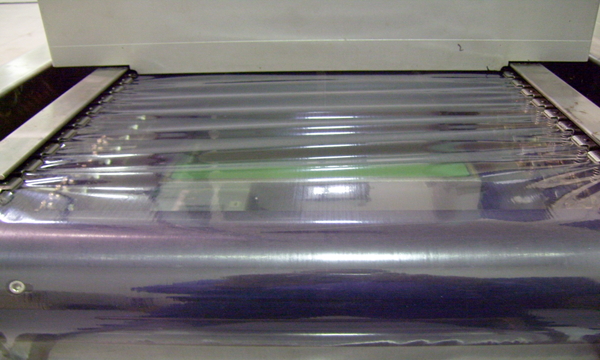
*If the same problem repeats in the same lane, pocket, or corner, stop and inspect that area before making broad machine adjustments.
How often should finished packages be inspected during production?
Finished packages should be inspected at startup, after adjustments, after film roll changes, after changeovers, and at the facility’s normal in-process inspection intervals.
Operators should look for:
- Clean, continuous seals
- Product kept out of the seal area
- Correct pocket shape
- Proper vacuum or package atmosphere
- Centered cuts
- Clean package edges
- Correct print registration
- Stable package discharge
If package quality changes after an adjustment, film change, or restart, inspect the finished packs before returning to full production speed.
Additional checks such as leak testing, peel testing, or gas testing should follow the facility’s quality procedures.
Film Transport and Gripper-Chain Maintenance
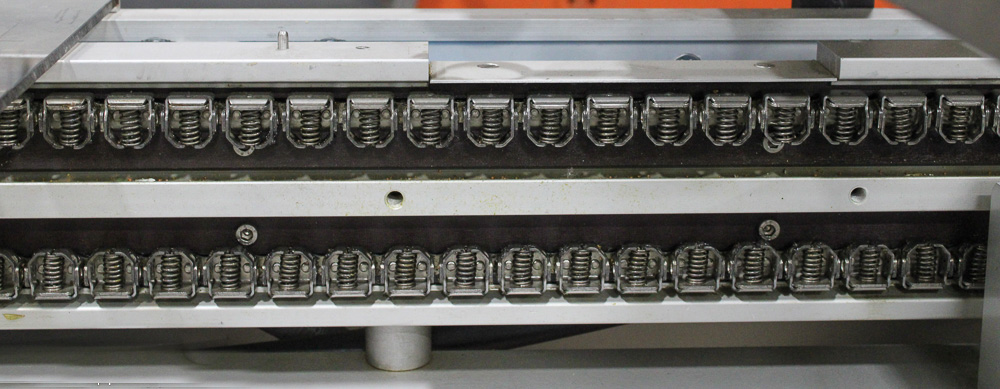
What maintenance does a rollstock film transport chain require?
A film transport chain should be inspected for cleanliness, lubrication, wear or rust, proper tension, gripper condition, guide wear, and unusual noise. Both sides of the machine should pull the film forward evenly.
Common problems include:
- Grippers not opening correctly: The film may not enter or release from the grippers properly.
- Chain wear or stretch: Excessive wear can contribute to indexing and alignment problems between machine stations.
- Worn gripper clamps: Grippers may lose their ability to hold the film securely.
Maintenance personnel should check:
- Gripper opening and closing
- Broken, weak, or contaminated gripper components
- Chain-guide wear
- Sprocket condition
- Uneven left-to-right wear
- Film slip or edge tearing
- Correct lubrication
- Chain noise or chatter
A transport-chain problem can affect forming, sealing, registration, cutting, and trim width throughout the machine.
What are the signs of worn film transport grippers?
Worn or damaged grippers may allow the film to slip, wander, tear, or move unevenly through the machine.
Common symptoms include:
- Film slipping during indexing
- Damaged film edges
- Web skew
- Registration drift
- Uneven trim width
- Wrinkles entering the forming station
- Crooked cuts
- Defects that repeat near the same chain location
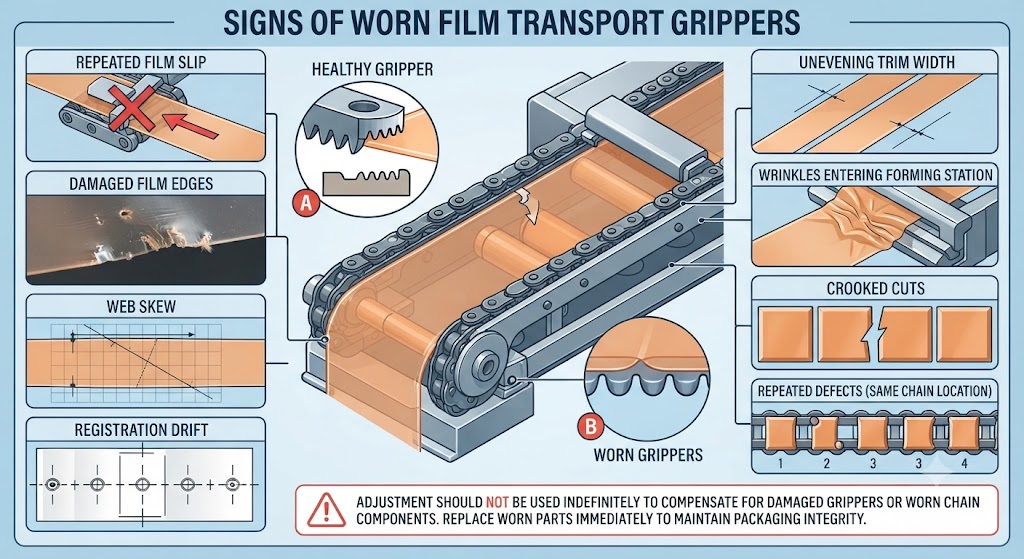
Should operators adjust the gripper chain when the film begins to wander?
Not as the first step. When film begins to wander, first check the simpler causes:
- Film roll centering
- Correct film threading
- Unwind tension
- Dancer operation
- Roller alignment
- Damaged film edges
- Uneven trim pull
Chain-related adjustments should be made only when:
- Basic film-path causes have been ruled out
- A measurable chain or clearance condition has been identified
- The person adjusting is properly trained
- The machine-specific procedure is followed
- The machine has been placed in a safe condition
Chain adjustments should be made only after these causes have been ruled out and a chain-related problem has been identified.
Any chain or clearance adjustment should be performed by trained personnel using the machine-specific procedure and proper safety practices.
Large or repeated chain adjustments can shift the package pattern relative to the forming, sealing, and cutting stations.
Forming Station Maintenance
What forming-station components require routine inspection?
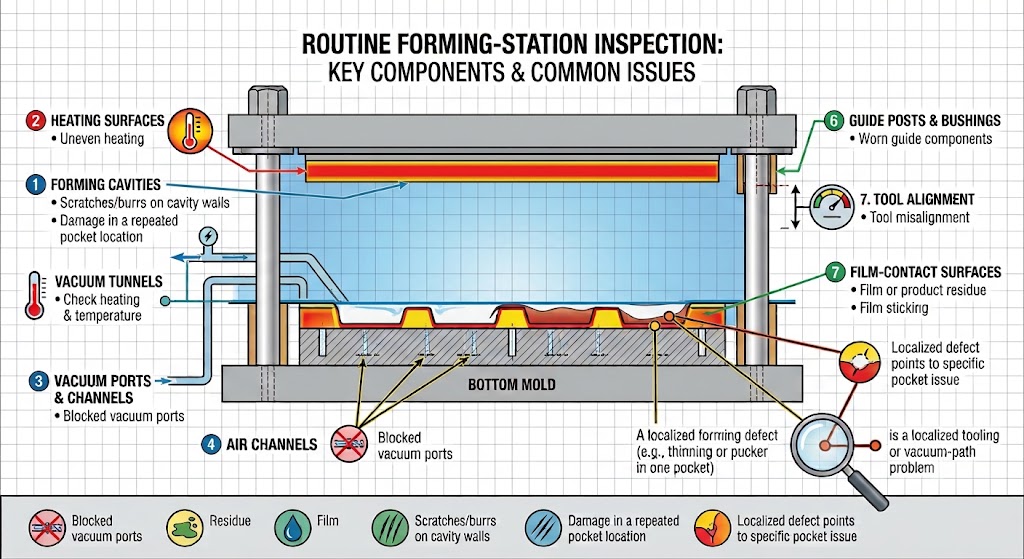
Routine forming-station inspection should include the forming cavities, heating surfaces, vacuum ports,
air channels, guide posts, bushings, tool alignment, and film-contact surfaces.
Maintenance should look for:
- Blocked vacuum ports
- Film or product residue
- Scratches and burrs
- Uneven heating
- Film sticking
- Worn guide components
- Tool misalignment
- Damage in a repeated pocket location
A localized forming defect often points to a localized tooling or vacuum-path problem.
How do blocked vacuum ports affect package forming?
Blocked vacuum ports prevent air from being removed evenly from the forming cavity. The film may form too shallowly, lose corner definition, or produce a repeated defect in the same pocket.
Possible signs include:
- One shallow cavity
- Poor corner definition
- Uneven pocket depth
- Wrinkles around the forming flange
- Poor product fit
- Repeated defects in the same location
Vacuum ports and passages should be cleaned using the approved tooling and maintenance procedure.
What causes thin corners in a formed rollstock pocket?
Thin corners occur when the forming web stretches excessively in localized areas. Possible causes include excessive draw depth, sharp tool geometry, insufficient material thickness, uneven heat, or poor plug-assist performance.
Thin corners matter because they can lead to:
- Punctures
- Vacuum loss
- Package leaks
- Weakness during handling
- Product contact with overstretched film
Changing forming settings may help, but repeated thin-corner failures may require a review of the film structure or forming-tool geometry.
Sealing Station Maintenance
How often should sealing gaskets be inspected?
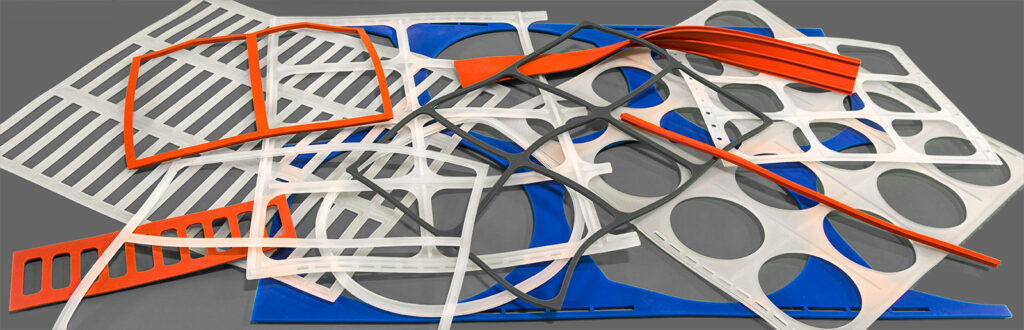
Sealing gaskets should be visually inspected during routine maintenance, changeovers, tooling cleaning, and whenever repeatable seal defects appear.
Look for:
- Cuts or tears
- Hardening
- Permanent compression
- Uneven gasket height
- Poor seating
- Contamination beneath the gasket
- Localized wear
- Loss of resilience
A worn or dimensionally inconsistent gasket can create uneven seal pressure, weak seals, and channel leaks.
Can a worn sealing gasket cause a leak in only one lane?
Yes. A gasket defect, a compression problem, or a poor fit in one section of the sealing tool can cause recurring leaks in the same lane, corner, or cavity.
When a leak repeats in one location, inspect:
- Gasket condition and fit
- Compression height
- Seal-plate condition
- Tool flatness
- Upper and lower tool alignment
- Contamination beneath the gasket
- Local temperature variation
Inter-Tech Supplies manufactures replacement molded silicone sealing gaskets for form-fill-seal packaging equipment where controlled fit and repeatable compression are important.
What maintenance does a seal plate require?
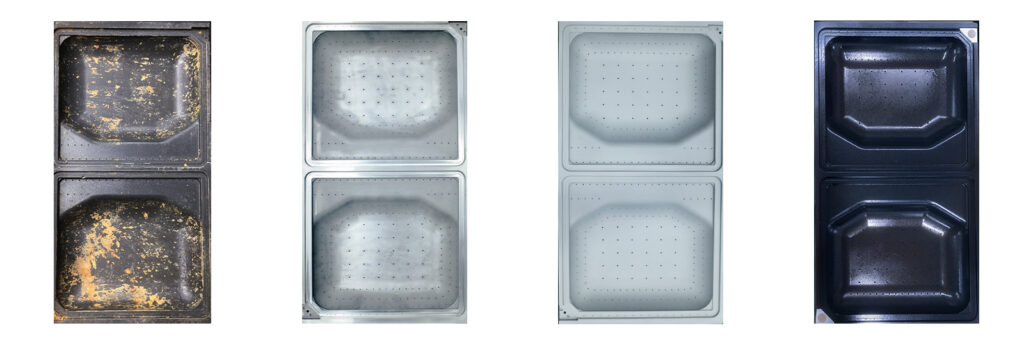
Seal plates should remain clean, flat, smooth, properly heated, and free from scratches, dents, coating damage, and product buildup.
A damaged or contaminated seal plate may cause:
- Film sticking
- Weak seal areas
- Uneven seal impressions
- Burn marks
- Poor release
- Repeatable lane-specific defects
- Difficult cleaning
Depending on the extent of the damage, a seal plate may be cleaned, resurfaced, repaired, re-machined, or recoated rather than completely replaced.
How can maintenance tell whether a weak seal is caused by heat or tooling?
First determine whether the weak seal affects all packages or repeats in one location.
A full-web problem may indicate:
- Incorrect recipe
- Low sealing temperature
- Short dwell time
- Low system pressure
- Wrong film orientation or pairing
A localized problem may indicate:
- Worn gasket
- Damaged seal plate
- Tool misalignment
- Localized heating-zone failure
- Contamination in one tool area
Product and moisture contamination should always be ruled out before increasing sealing temperature.
Cutting and Trim-Removal Maintenance
How do you know when rollstock cutting blades need replacement?
Cutting blades should be inspected when package edges become ragged, cuts remain incomplete, film strands remain attached, cutting noise increases, or trim begins breaking more frequently.
Other signs include:
- Packages remaining connected
- Torn corners
- Film dust
- Increased cutting pressure
- Web pulling during cutting
- Poor perforation consistency
Blade condition, alignment, pressure, holder condition, and anvil wear should be inspected together.
Why does edge trim keep breaking on a rollstock machine?
Edge trim may break because of a dull trim knife, excessive winder tension, poor suction, static, a blocked hose, an incorrectly positioned pickup nozzle, or a scrap strip that is too narrow.
First check:
- Whether the trim is cut cleanly
- The complete scrap path
- Suction airflow or winder pull
- Collection filters and bins
- Static conditions
- Recent film or format changes
Repeated trim breaks reduce machine availability and can lead to scrap wrapping around shafts or interfering with finished packages.
How does a trim removal unit improve rollstock efficiency?
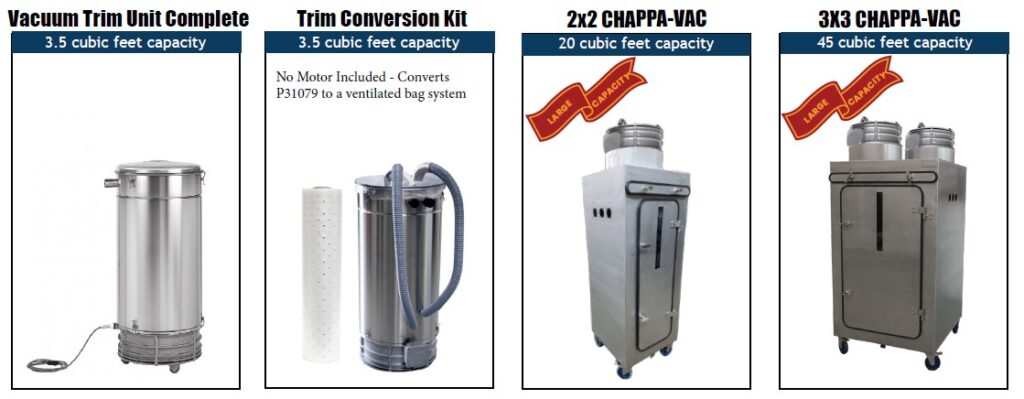
A properly operating trim removal unit collects edge trim and scrap film before it can accumulate around the cutting and discharge zones
Effective trim removal helps reduce:
- Scrap buildup
- Operator intervention
- Film wrapping around rotating components
- Discharge jams
- Cleanup time
- Unplanned machine stops
Inter-Tech Supplies offers trim removal solutions for packaging operations seeking more controlled scrap collection at the discharge end of the machine.
Sanitation and Restart Maintenance
What should be inspected after a rollstock machine is cleaned?
After sanitation, inspect the machine for remaining moisture, cleaning residue, disconnected utilities, displaced sensors, missing guards, blocked ports, and lubrication removed during cleaning.
Important post-cleaning checks include:
- Forming and sealing tooling clean and dry
- Vacuum ports open
- Sensors clean and dry
- Film rollers dry
- Guards reinstalled
- Air and vacuum lines connected
- Lubrication restored where required
- Cutting and trim paths clear
- No cleaning tools or loose objects left behind
The first packages after sanitation should be inspected carefully before full-speed production begins.
Why do rollstock machines sometimes have problems immediately after washdown?
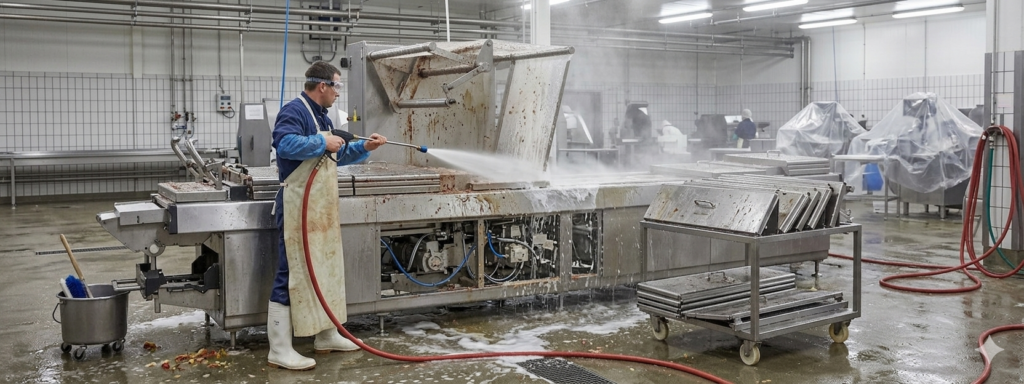
Washdown can leave moisture on rollers, sensors, sealing surfaces, electrical connections, vacuum passages, or tooling. Cleaning may also remove lubrication or move guides and sensors.
Post-washdown symptoms may include:
- Sensor faults
- Poor film tracking
- Weak seals
- Blocked vacuum ports
- Abnormal chain noise
- Film sticking
- Registration errors
When a problem begins directly after cleaning, first inspect what may have become wet, displaced, disconnected, or improperly reassembled.
Maintenance Scheduling and Spare Parts
How often should a rollstock packaging machine receive preventive maintenance?
Maintenance frequency should reflect production hours, cycle count, product environment, sanitation intensity, film type, and machine history.
A practical structure is:
- Daily: Operator observations, film tracking, seal and cut inspection
- Weekly: Chains, grippers, rollers, tooling surfaces, blades, trim removal
- Monthly: Pneumatics, vacuum, heating, electrical systems, sensors, alignment
- Periodic: Deep tooling inspection, chain-wear measurement, safety validation, spare-parts review
The machine manufacturer’s maintenance requirements and plant safety procedures should remain the primary technical reference.
Which rollstock replacement parts should be kept in stock?
Critical spares should be selected according to production impact, failure history, replacement lead time, and whether the component is shared across multiple machines.
Common candidates include:
- Grippers and chain components
- Chain guides
- Sealing gaskets
- Cutting blades
- Slitting wheels
- Vacuum seals and filters
- Heating elements
- Temperature sensors
- Pneumatic valves
- Common sensors
- Trim-removal hoses
- Format-specific inserts
The goal is not to stock every possible part. It is to protect production from failures that pose the greatest risk of downtime.
When should rollstock tooling be repaired instead of replaced?
Repair may be practical when damage is localized, the package format remains correct, and the tooling can be restored to reliable dimensions and surface condition.
Replacement or redesign may be more appropriate when:
- Wear is widespread
- Flatness or alignment cannot be restored
- The tooling has failed repeatedly
- The package format is changing
- Repair cannot restore dependable performance
- A redesigned tool would improve uptime or package quality
A qualified tooling resource should evaluate repairability, tolerance, lead time, and production risk together.
Need Help Supporting Your Rollstock Equipment?
Inter-Tech Supplies helps packaging operations keep existing horizontal form-fill-seal equipment running with replacement parts, molded sealing gaskets, tooling fabrication, tooling repair, PTFE/Teflon coating, trim removal support, gripper chain components, and other production-critical wear parts.
If you are dealing with repeat seal problems, please call 800-722-7761 for consultation or scheduling a PM or preventative maintenance visit. Looking for repairs on worn tooling, trim-removal issues, gripper-chain wear, or hard-to-source replacement parts, our team can help you evaluate the issue and identify practical next steps.